The Neuroscience of Emotional Healing: Why Letting Go Doesn't Work
Your emotions don't disappear when you suppress them. They change form. Here's the neuroscience behind real emotional healing.
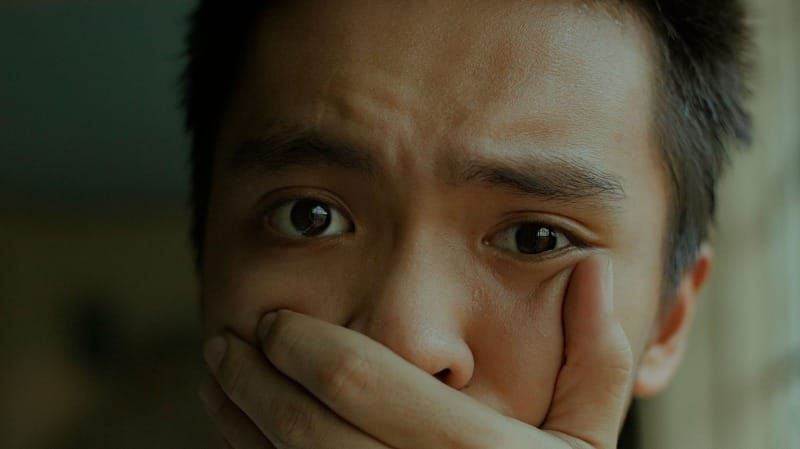
Some emotions do not disappear simply because we tell them to.
They may become quieter for a while. They may return through a song, a street, an ordinary sentence, or a moment when the world finally gets still enough for us to hear ourselves again.
A few years ago, I was walking my dog with new headphones on when Lady Gaga’s I’ll Never Love Again came on. I started crying before I consciously understood why.
The song brought me back to someone I had loved and stayed close to after we broke up. During COVID, he was stranded in Vietnam. I helped him get back to Taiwan, helped him find work, helped him find a place to stay. Not long after, he chose to end his life.
Around the same time, I also lost a friend who felt like a sister to me.
There are losses you do not “get over.” At least, I do not think that is the most loving way to describe them.
The sadness still visits me sometimes. But the way I meet it has changed. I no longer treat it as proof that I am moving backwards or that all my healing has failed. I let it remind me that I loved deeply. I let it remind me to live fully enough to honour the people I can no longer call.
The grief did not turn into something pretty. It did not become a lesson I would ever have chosen.
But over time, it stopped being the only thing I could see.
Suppressing a feeling is not the same as healing it
Many of us learned early that difficult emotions make other people uncomfortable.
Do not cry. Do not be angry. Be strong. Think positively. Move on. Do not make a big deal out of it.
Sometimes those words are said with love. Sometimes they are said because the people around us do not know what else to do with pain.
Either way, they can teach us to leave ourselves at the exact moment we most need company.
Emotions are not dirt to clean away. They are not proof that we are weak, ungrateful, dramatic, or too much. They are experiences involving the mind, the body, attention, memory, and the meaning we make of what happened.
When a feeling is pushed away, it may not vanish. It may show up later as rumination, irritability, withdrawal, a body that feels permanently tense, or the strange sense that something is wrong even though you cannot name what it is.
That does not mean every headache, stomach problem, or tired day is caused by unprocessed emotion. Bodies are complicated, and physical symptoms deserve ordinary medical care too.
It simply means that emotional pain deserves to be taken seriously, not dismissed because it cannot be measured as neatly as a broken bone.
Why “just let it go” can feel impossible
Letting go sounds simple when you are not the person holding the memory.
But a feeling often stays because it is connected to something that mattered: love, safety, belonging, dignity, a future you thought you would have, or a version of yourself you were trying to protect.
You cannot force yourself to let go of something by treating it as meaningless.
And you do not have to solve every feeling by finding one perfect explanation in your childhood or past. Sometimes understanding where a pattern came from is helpful. Sometimes, in the middle of a hard day, the kindest thing is simply to say: “This hurts. I do not have to explain all of it before I am allowed to care for myself.”
For me, emotional healing has become less about making the feeling disappear and more about changing the relationship I have with it.
Can I let sadness be sadness without turning it into hopelessness?
Can I let anger show me that something matters without using it to hurt myself or someone else?
Can I let grief remind me of love without demanding that I relive every loss at once?
Those questions feel more honest than “How do I get rid of this?”
The difference between feeling and getting lost in a feeling
There is a misconception that if we allow ourselves to feel, we will never stop.
I understand that fear. Some feelings are so large that even opening the door a little can seem dangerous.
But feeling an emotion does not have to mean drowning in it.
It can begin with a very small act of recognition:
“I am not fine right now.”
“I am angry because something felt unfair.”
“I am exhausted because I have been carrying too much.”
“I am sad because this mattered to me.”
Naming a feeling does not solve everything. But it can interrupt the blur of “something is wrong with me.” It can turn a storm into a few things you can finally see.
If you are feeling many things at once and cannot tell what is underneath, you may find When You Feel Too Much at Once: A Gentle Way to Find the Emotion Underneath helpful. It offers a simple way to name what is happening, let the urgency come down a little, and choose one small next step.
Give the feeling somewhere kind to go
Once you have noticed what is there, you do not have to turn it into an achievement.
You might write it down. You might walk. You might cry. You might make something. You might talk to one person who does not rush to fix you. You might take a shower, feed yourself, rest, or allow the day to be smaller than you wanted it to be.
There is no single right outlet, and no practice that works for every person.
For me, writing became one place where grief could go without taking over every room in my life. Movement has helped too. So has strength training. So has being honest about the days when I do not have a beautiful answer.
The point is not to transform pain into productivity. You do not owe anyone a lesson from what hurt you.
But sometimes, when we stop running from a feeling, it stops having to chase us so loudly.
What healing has looked like for me
I have had cancer twice. I have been through more than twenty surgeries.
For a long time, I carried exhaustion, fear, grief, and the question that so many people ask silently: “Why me?”
I tried to push those feelings down. I tried to act like I was fine. I tried to cover the hard parts with positivity because I thought that was what strength looked like.
It did not make the feelings go away. It only made me lonelier inside them.
Slowly, I learned to look at what I felt with more honesty. Not all at once. Not perfectly. Not without help.
I learned that I could be grateful to be alive and still tired of being strong. I could believe in possibility and still let myself be angry. I could have a meaningful life without pretending that pain had made me lucky.
That is part of why I write now.
Not because suffering is noble. It is not.
But because I know how different it feels when someone does not immediately ask you to turn your pain into a positive thought.
Sometimes the first form of healing is simply this: someone sits beside you long enough for you to stop being afraid of your own feelings.
A small way to begin today
If an emotion keeps returning, try asking yourself three questions on paper:
- What happened, as plainly as I can say it?
- What did it make me believe about myself, other people, or the future?
- What do I need right now — comfort, rest, a boundary, support, or time?
You do not need to write the perfect answer. You do not need to uncover your whole past. You are only giving yourself a place to be honest for a few minutes.
If you would like some structure in an anxious or overwhelmed moment, you can use my Free Anxiety Relief App. It includes a short grounding guide and a private writing space. It is free to use; on first use, it asks for your email to create a free Future Healing Design membership, and you can unsubscribe from future emails at any time.
You do not have to become untouched by what happened
Healing is not becoming a person who never cries at a song, never feels scared, never remembers, and never has a difficult day.
It may be becoming someone who can feel a feeling without immediately abandoning herself inside it.
It may be realising that the sadness is not here to destroy you. It may simply be here because something mattered.
And maybe, with time, with support, and with a little more kindness than you were taught to give yourself, the feeling can take up a different amount of space.
Not gone.
Not denied.
Just no longer the whole room.
When you need more than self-help
This article offers general emotional support. It is not a diagnosis or a replacement for therapy, medical care, or crisis support.
If sadness, anxiety, trauma-related symptoms, or thoughts of harming yourself are persistent or affecting your daily life, please consider speaking with a qualified mental-health professional. If you are in immediate danger or think you may act on thoughts of self-harm, contact local emergency services or a crisis service in your country now.[1]
Reference
[1] National Institute of Mental Health. Caring for Your Mental Health.