
Harvard Research: Meditation Keeps the Aging Brain Young
Worried your brain's aging? Harvard shows meditation preserves cortical thickness—discover simple daily practices to slow decline and keep your mind young.
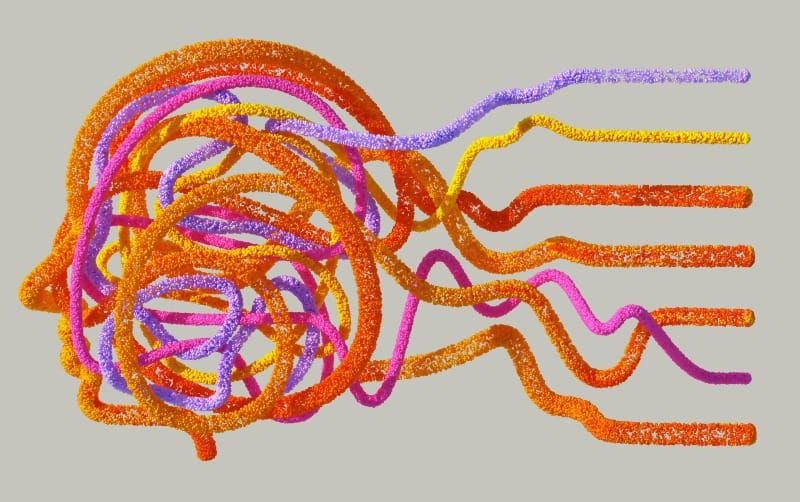
Sometimes when you're tired, you just want to sit down and do nothing for a while. Just rest.
But even then — even when you're not doing anything, just sitting there, mind drifting — your brain won't stop.
One moment you're back on something you didn't finish yesterday. The next, you're worrying about tomorrow. Then suddenly you're in a conversation from three years ago that you still can't quite let go of.
You think you're resting. But your brain hasn't rested at all.
What we think of as "switching off" — we've never actually switched off. And that, is neuroscience.
Neuroscience also tells us: this state can be changed.
What you think is rest — your brain is actually consuming you
In 2001, neuroscientist Marcus Raichle at Washington University School of Medicine accidentally discovered something that shocked the entire scientific world.
He was studying which brain regions activate when people focus on tasks, using "eyes closed, doing nothing" as the baseline control group. What he found was the opposite of what he expected.
When participants were doing nothing, the brain didn't go quiet. A vast network of neural regions fired intensely — consuming 60 to 80 percent of the brain's baseline metabolic energy.
He named this the Default Mode Network, or DMN.
What does the DMN do? It replays memories, worries about the future, calculates self-image, and engages in endless self-reflection. In plain language: it keeps running the exact clips you most wish it would stop playing.
You lie in bed, lights off, phone down, ready to sleep. But your brain starts moving: tomorrow's meeting, what that person said last week, something you still haven't dealt with, whether something's wrong with your body… That's not you having an anxious personality. That's your DMN running at full capacity.
You think scrolling on your phone is relaxing. But it doesn't quiet the DMN — it feeds it more material to work with. You put your phone down feeling more tired than before you picked it up.
For women going through menopause, this is worth paying close attention to.
After menopause, estrogen drops significantly. Estrogen isn't just a reproductive hormone — it also regulates serotonin, dopamine, mood stability, and cognitive function. When estrogen declines, the brain's resilience to stress weakens, and the DMN becomes more prone to overactivity. Sleep deteriorates. Anxiety increases. Memory slips. That foggy, unclear feeling that's hard to name — much of it connects directly to an overactive DMN.
Research has found that an overactive DMN is directly linked to depression and anxiety. When it won't stop, you ruminate — turning the same uncomfortable thoughts over and over, like a record stuck on repeat, with no way out.
But this is not the inevitable fate of a menopausal brain.
A Harvard neuroscientist used MRI to show: the brain can age in reverse
In 2005, Sara Lazar, a neuroscientist at Massachusetts General Hospital at Harvard, used MRI scans to compare two groups of people — 20 long-term meditators, and 15 people with no meditation experience.
These meditators weren't monks. They weren't living in isolation on a mountain. They were ordinary people with jobs, families, and normal social lives — who had simply made meditation part of their daily routine.
The results shocked the scientific community.
MRI scans showed that the meditators had significantly thicker brain regions associated with attention, emotional regulation, and sensory processing — including the prefrontal cortex and right anterior insula.
The prefrontal cortex is the brain's command center. It handles rational judgment, emotional regulation, impulse control, and decision-making. When it's strong, you don't collapse under pressure, your emotions have a governor, and your thinking stays clearer.
Under normal circumstances, the prefrontal cortex gradually thins as we age. This is why emotional regulation becomes harder, memory slips, and sleep deteriorates over time. Most people assume this is simply unavoidable.
But Lazar found something almost unbelievable: the prefrontal cortex thickness of 40 to 50-year-old long-term meditators was the same as that of people in their 20s and 30s.
Not just "feeling younger." The physical structure, measured by MRI, was the same thickness.
She also found that the difference between meditators and non-meditators was most pronounced in older participants. The protective effect of meditation on the aging brain is actually stronger in older adults.
It's never too late to start.
Why meditation works — it quiets the DMN
The mechanism behind meditation's brain-preserving effect comes back to the DMN.
Multiple neuroscience studies have found a direct link between meditation and significantly reduced DMN activity. When you meditate — when you bring your attention back to your breath, back to what's happening right now — the DMN has nowhere to wander. The endless rumination and worry begin to quiet.
One study had both meditators and non-meditators do the same thing: just sit still and do nothing. The meditators showed noticeably lower DMN activity even during rest. Their brains were actually resting.
Even more encouraging: research suggests that practicing 10 to 20 minutes a day, five days a week, can begin to show measurable reductions in DMN activity within just 2 to 3 weeks.
No retreat required. No need to become a meditation master. No need to empty your mind completely. Just a few minutes each day, practicing bringing your attention back. Your mind will wander. Bring it back. Again and again. That's meditation.
When the DMN quiets down, the prefrontal cortex gets the activation it needs. Neuroplasticity means the brain can reshape itself at any age — as long as you give it the right stimulus.
Strength training: another way to keep your brain young
If you're someone who genuinely cannot sit still — who can't see themselves meditating — I want to tell you something.
Strength training also keeps the brain young. And there's solid science behind it.
Neuroimaging studies have found that resistance training can increase cortical thickness in the brain regions most vulnerable to aging — particularly the hippocampus, responsible for memory formation, and the prefrontal cortex, responsible for complex thinking and planning.
If you've ever done weight training, you already know this: when you're squatting, deadlifting, doing pull-ups, you cannot zone out. You have to feel every detail — your knees, your breath, your back, whether your glutes are firing. If you lose focus, you don't just perform badly. You get hurt.
That level of physical concentration, and the act of bringing your attention back to your breath in meditation, activate similar mechanisms in the brain — both train the prefrontal cortex, both give the DMN no room to wander.
A systematic review confirmed: resistance training produces substantial functional changes in the frontal lobe, accompanied by improvements in executive function — including focus, working memory, and cognitive flexibility. These are exactly the capacities you need most in daily life.
For women in menopause, strength training has one additional benefit that meditation doesn't: it simultaneously fights the muscle loss, bone density decline, and metabolic slowdown that come with falling estrogen. You're protecting your brain and your body at the same time.
Meditation quiets the brain at rest. Strength training deepens focus in motion. One still, one moving — both lead to the same place: a prefrontal cortex that stays young.
Together, they are the most powerful combination for menopausal brain health that neuroscience currently supports.
Where to start
Meditation: start with five minutes. Every morning after waking up, or before bed, sit down, close your eyes, and put your attention on your breath. Inhale — feel the air come in. Exhale — feel your body release. Your mind will wander. Bring it back. That's it. No tools needed, no money required, no special environment.
Strength training: start where you are. No experience? Begin with bodyweight squats and wall push-ups. Have a gym? Start light, and let your body build the movement patterns first. Two to three times a week, 45 minutes each session — your brain is already starting to change.
You don't need to do both perfectly at once. Pick one. Start.
Because starting now, imperfectly, is already so much better than thinking about it and never beginning.
A 50-year-old brain can be as young as a 30-year-old's
This isn't a slogan. It's what Harvard neuroscientists measured with MRI scans. It's what study after study has confirmed.
Your brain is more adaptable, more resilient, and more capable than you think.
Menopause isn't a decline. It's your brain preparing for the next chapter.
And the best thing you can give it is a little quiet every day, and a few sessions of focused movement every week.
Start today.
Join Future Healing Design as a free member and get:
✦ In-depth articles on healing and manifestation
✦ Free downloads: PDF tools including healing exercises, procrastination workbooks, and more
✦ Divination quizzes and self-discovery games
You might also want to read:
 Tingman Liu
 Tingman Liu