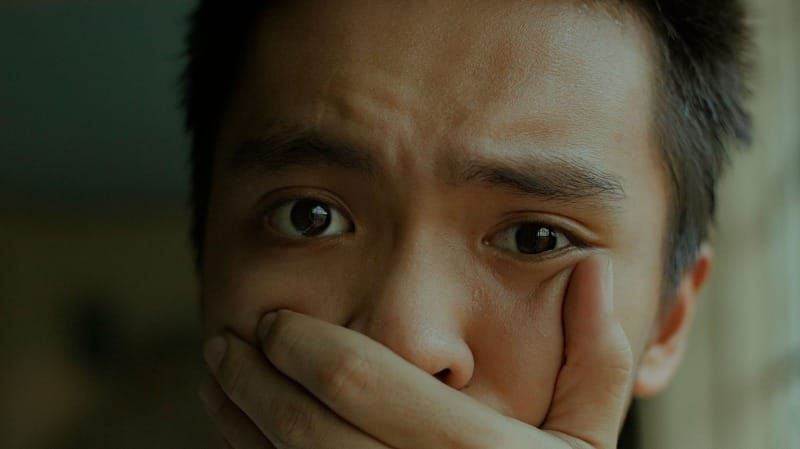
You Made the Vision Board. You Did the Visualizations. Why Hasn't Love Changed?
You've done the vision boards. You've done the visualizations. So why hasn't love changed? The problem might not be your mindset — it might be your nervous system. Here's the neuroscience behind why manifestation keeps stalling in love.

Love is probably the topic I get asked about most.
One difficult relationship after another. So much effort, and still no real result. Some people can't even get a relationship started in the first place.
And it's not just because a good partner matters deeply to our lives — the need we have for a romantic partner is different from every other kind of relationship. It's its own strange, particular thing. Love.
So many people have discovered the law of attraction, learned about manifestation, made vision boards, written out their ideal partner lists, visualized every day, told themselves to think positively, and believed that the right relationship would come. But the same type of person keeps showing up. The same patterns play out again and again.
The problem isn't that you don't believe enough. It isn't that your visualizations aren't sincere enough.
The problem is that this is far more complicated than making a wish — and it's happening inside your nervous system.
Who you attract isn't decided by what you "want"
Israeli psychology professor Mario Mikulincer has conducted extensive research on attachment, and his findings are something many people find difficult to accept: when your attachment system gets triggered — by someone a little hard to read, someone emotionally unpredictable, someone who runs hot and cold — your nervous system enters a state of high activation. Your heart rate rises. Your attention sharpens. Your emotions swing intensely.
This feeling is almost indistinguishable from what you think of as "falling for someone."
But it isn't that. It's your nervous system replaying a familiar pattern.
I've been through this more times than I can count. It wasn't until I noticed that every relationship I'd had carried a striking similarity that I finally started asking myself: why?
In 1987, psychologists Phillip Shaver and Cindy Hazan conducted research that changed the field of relationship psychology. They found that the way romantic love operates in adults runs on the same system as the attachment patterns formed in infancy. The relational blueprint you developed with your earliest caregivers is the same blueprint running your love life today.
This is why your vision board says "gentle, stable, someone who initiates care" — but the people who actually show up look nothing like that. Because your conscious mind is visualizing, while your nervous system is running an entirely different program.
Attachment theory identifies four adult attachment styles: secure, anxious, avoidant, and disorganized. Securely attached people tend to attract partners who offer emotional stability and support. Anxiously attached people — because they fear abandonment and need constant reassurance — are strongly drawn to people who create uncertainty, because that uncertainty feels familiar to their nervous system. Avoidant people tend to attract partners who respect their need for distance.
Every pattern is unconsciously seeking out "what feels familiar." The problem is, familiar isn't the same as healthy.
That feeling that keeps you up at night, that has you checking your phone, that makes your heart beat a little faster — sometimes it isn't a sign that you've found the right person. It's your nervous system recognizing a familiar pattern.
Early infatuation represents a dopamine-driven brain state. The intensity of the chemistry feels real, but what it reveals is neurological compatibility, not life compatibility. Sustainable relationships require alignment in values, communication, and emotional regulation — none of which are visible when you first meet someone.
The person who makes your heart race might just be letting your old wounds ache in a way that feels familiar. And the person who makes you feel "fine," calm, unremarkable — they might actually be the first time your nervous system has encountered something genuinely safe. It's just so unfamiliar that you've mistaken it for having no feelings at all.
Your oxytocin levels are shaping your capacity for love
Love isn't a single feeling. It's three distinct but interconnected neurological processes: desire, attraction, and attachment.
Desire is driven primarily by testosterone and estrogen. Attraction is governed by dopamine, norepinephrine, cortisol, and serotonin — yes, cortisol, the stress hormone, plays a significant role in the attraction phase, which is why the early stages of liking someone come with that mixture of excitement and anxiety. Attachment is governed by oxytocin and vasopressin — the substances that move a relationship from "heart racing" to "genuinely at ease."
These three phases don't automatically unfold in sequence. Many people stay in the attraction phase for a long time and never reach attachment — because their nervous system doesn't know how to receive real connection.
Oxytocin is a neuropeptide secreted by the hypothalamus, often called the "bonding hormone." A 2014 study tracking 163 young adults found that people who had recently entered romantic relationships had significantly higher oxytocin levels than those who were single. More importantly, couples who were still together six months later had higher early oxytocin levels — meaning oxytocin isn't just a byproduct of love. It's a key factor in whether connection can actually last.
Research has also found that securely attached people not only have lower cortisol levels than those with insecure attachment — they also have higher oxytocin levels. This is a system that can be influenced. As your nervous system slowly learns that connection is safe, the oxytocin system becomes more active, making it easier to build and sustain genuine emotional bonds.
Dopamine says "I want this." Oxytocin says "I'm safe here."
Many people's love lives stay stuck in a dopamine-dominant state — always pursuing, always longing, always falling, but never quite reaching that deeper sense of safety and satisfaction. Because oxytocin activation requires real connection. Not visualization, not wishing — your nervous system actually experiencing being seen, being accepted, being safe.
What is your RAS looking for?
The core mechanism of manifestation is the RAS — the Reticular Activating System, your brain's filter, which determines what you notice and pay attention to in your environment.
But the RAS doesn't filter based on what you've wished for. It filters based on what your nervous system considers "important" and "familiar."
If your nervous system has learned that love requires fighting for, that love is unstable, that you have to keep giving to avoid being left — your RAS will scan a room and flag the people who fit that pattern, making sure you notice them.
That instant sense of recognition, that feeling of fate — sometimes it isn't the universe arranging things. It's your filter finding its most familiar frequency.
This is why you can fill an entire wall with vision boards before you're truly ready and still keep attracting the same kind of person. Because your RAS hasn't been recalibrated yet.
Why positive thinking alone doesn't work
New York University psychology professor Gabriele Oettingen spent over 20 years studying the science of motivation. Her research found that when people simply immerse themselves in imagining a beautiful future — picturing themselves already in the relationship they want, feeling that happiness — the brain subtly mistakes the wish for reality.
And as a result, the motivation to actually act drops.
But focusing only on obstacles and difficulties, with no vision of what's possible, doesn't work either. That leads to hopelessness.
What actually works is combining a clear vision of what you want with an honest look at what's in the way. She calls this "mental contrasting" — vividly imagining your desired outcome, then honestly facing the internal obstacles blocking you from it. That tension is what genuinely activates the drive to move.
WOOP: turning manifestation into something you can actually do
Oettingen eventually developed a complete method called WOOP:
Wish: What do you actually want in love? Be specific. Not "a good relationship" — but "a relationship where I feel safe, real, and respected."
Outcome: If this wish came true, what would your life and your sense of self look like? Close your eyes and genuinely feel it.
Obstacle: What is your real internal obstacle? Not external conditions — not "I can't find anyone good" — but what inside you is in the way. Maybe it's the fear of abandonment. Maybe it's the belief that you don't deserve to be loved well. Maybe it's the pattern of wanting to run every time someone stable shows up.
Plan: If that obstacle appears, what will you do? Write it out in "if… then I will…" format.
The most important step in WOOP isn't Wish. It's Obstacle.
The first time you honestly fill in that Obstacle field, you might discover that your real barrier isn't "I can't find the right person" — it's "I don't believe a good relationship can happen for me," or "I'm used to having to earn love, and stable relationships make me uncomfortable."
That discovery is where real change actually begins.
This is where real manifestation starts
Manifesting love isn't the problem. The sequence is.
Before the visualizations, before the wishes, there's more fundamental work to do — understanding your attachment patterns, and seeing what map your nervous system is using to navigate.
This isn't about being hard on yourself. It's about asking honestly:
When someone is kind to me, certain, stable — what's my first reaction? Do I feel safe, or does a voice inside say "this is too easy, it doesn't feel real"?
When I say I want a stable person, what does my body actually feel about "stable"? Relief? Or boredom?
If the answers to those questions make you a little uncomfortable — that's a good sign. It means your nervous system is starting to tell the truth.
Healing attachment patterns isn't fast. But it's the most important foundation for actually manifesting the relationship you want, not just the one that feels familiar.
Because when your nervous system learns that stability is safe, that being loved is natural, that you don't have to keep earning it — that's when your RAS will start flagging those people in a crowd. That's when what you're manifesting is actually what you want, not just what you know.
I didn't truly understand this until I was 50. The most important thing in love isn't finding the right person. It's becoming the person who's ready.
If you want to go deeper into the science behind this — and explore more on healing, manifestation, and love — I write about all of it at futurehealingdesign.com. Join as a free member to access all full-length articles and a free healing course PDF.
When your nervous system is ready, the right relationship will find its way to you.
Join Future Healing Design as a free member and get:
✦ In-depth articles on healing and manifestation
✦ Free downloads: PDF tools including healing exercises, procrastination workbooks, and more
✦ Divination quizzes and self-discovery games
Keep exploring
If this resonated with you, these guides may help you take the next step:
• Why Other People's Moods Feel Like Your Emergency
• Why Your Body Won't Let You Heal — The Science of Body Memory