The Science and Art of Letting Go: When Blocking and Forgetting Aren’t Enough, What Is Your Body Mourning?
If you’ve ever experienced a heartbreaking breakup, you know the feeling. Why do we still feel pain even after blocking and burning the past? Explore the neurobiology of “phantom pain,” emotional addiction, and actionable steps to relocate your soul.

If you’ve ever experienced a heartbreaking breakup, you know the feeling: even though the other person has physically vanished from your life, it feels as if a giant hole has been torn in your heart, letting a cold wind howl through.
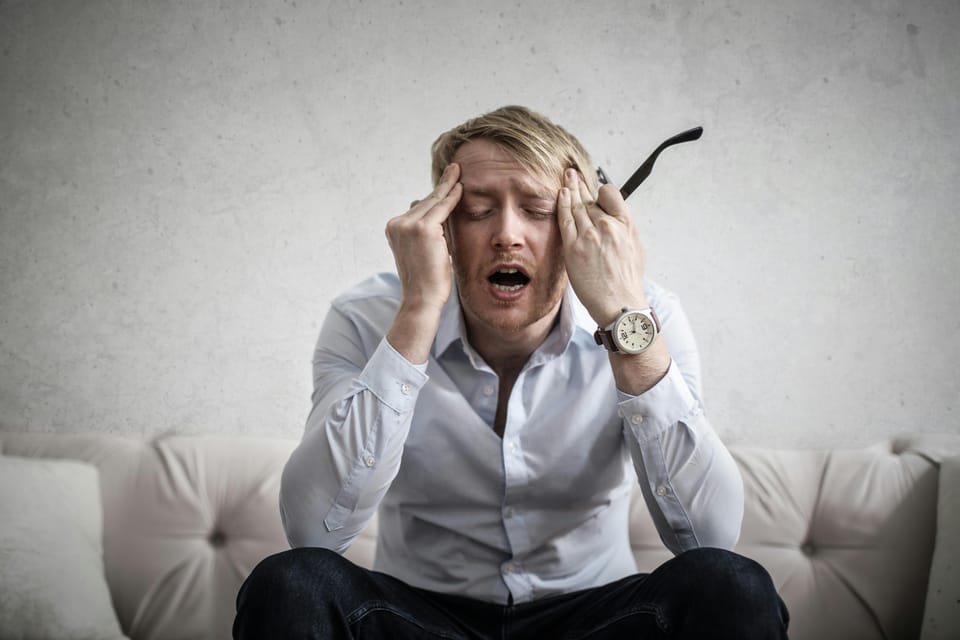
My friend, S, went through a long and agonizing farewell. In the beginning, he oscillated between the hope of reconciling and the despair of rejection. In psychology, this pain is substantiated by neurobiology: the Anterior Cingulate Cortex—the area of the brain that processes physical pain—becomes highly active. In other words, the brain doesn’t distinguish between a “broken heart” and a “broken leg.” To the brain, losing an attachment bond is a real traumatic injury, manifesting as chest tightness, suffocation, or actual physical pain.
Cutting Ties: Severing the Signal, but Not the “Loss Aversion”
To survive, S showed immense determination. He finally steeled his heart, blocked all contact, and deleted thousands of photos. He thought that by not hearing, seeing, or communicating, he could cut off the interference.
But the pain didn’t stop. This involves “Loss Aversion” from behavioral economics. This creates a sense of “infinite mourning,” where your subconscious treats ‘loss’ as a tragedy that must be solemnly memorialized. Any thought of finding a new relationship or joy is seen by the nervous system as a “betrayal.”
Once, while watching a documentary about a professional mountain climber who perished in an accident, S was deeply indignant to see the widow develop a relationship with the climber’s best friend three months later through mutual support. He couldn’t accept it: “How could she love someone else after only three months?”
This anger exposes the trap of “possession.” The “Endowment Effect” in psychology explains this: once we label a relationship as “mine,” its value becomes disproportionately magnified. To S, that wife should forever guard her “loss” because, subconsciously, he views a partner as an “extended self.” Losing a partner is like losing a limb, triggering a fierce defensive instinct.
He also mentioned a Japanese man who lost his wife in the tsunami and spent years searching across Japan for her. Although I haven’t seen the film, I imagine that for someone who lost a loved one in such a catastrophe, the search became both his solace and his life support. To S, however, that was “true love”—the only form of love he could comprehend.
Repaining or Burying: Are You Choosing to “Guard the Grave” or “Accept the Light”?
Observing S’s reactions, I wondered: why do we see two completely different worlds in the same story? S’s identification with the “endless search” reflects his deep-seated anxious attachment style and defense mechanisms. In psychology, this refusal to end mourning is sometimes called “Grief Loyalty.” To him, ending the pain equates to forgetting, and forgetting is betrayal. In his value system, love must carry a “tragic weight.” He traps himself in the past because his self-worth is tied to that “loss.”
However, to me, the man and woman who leaned on each other in grief and eventually fell in love exemplify a high level of “self-differentiation.” They didn’t stop loving the deceased; rather, because they both deeply loved the climber, they understood the cracks in each other’s souls best. Their love after three months is a form of “post-traumatic growth.” It wasn’t about replacing the dead; it was about choosing not to let the living freeze in the cold. This connection is the sublimation of love for the dead into an acceptance of life.
I have always believed that the duration of mourning has nothing to do with the depth of love. A person who knows how to love themselves and is emotionally mature can “transform pain into a blessing.” This is “high-functioning self-regulation.” It doesn’t mean they are cold-blooded; it means they understand: “The dead are gone; the living must move on.” Choosing to let the pain fade and embracing the warmth of life is the most mature and deepest form of love.
Burning the Image: The Streetlight is Off, but the Highway is Still There
Later, to combat his lingering longing, S began practicing intensive meditation. He visualized fire in his mind, “burning away” his ex-girlfriend’s image whenever it appeared. Six months later, he told me, “I can’t even remember what she looks like anymore.”
Common sense suggests he should be healed. But something cruel happened: he still thought of her every day. The chronic, shadow-like pain never vanished. Why? Science offers three explanations:
- Emotional Addiction: The brain has inertia. Long-term pain accustoms the body to cortisol (the stress hormone). When he forced the image away, his system felt a “withdrawal,” leading to a phantom pain where the body craves that familiar heartbreak.
- Thickened Neural Circuits: Years of love and turmoil carved a “highway” in his brain. Burning the image was just “turning off the streetlights”—the infrastructure is still there. Whenever he is idle, his neurons instinctively drive down that old, painful road.
- The Slinky Effect (Suppression): Also known as the “White Bear Effect.” The harder you try to “burn” or “block” a thought, the more the brain monitors for it, reinforcing the pain as a “background noise.”
Stripping Away the “Deep Affection”: The Loss of Ownership
S and his ex were together for years and almost married. When she reached out to him six months later hoping to maintain a “family-like” bond, S refused. His reason: “I can’t stand seeing someone else by her side.” Here, we touch the core truth: Is this pain love, or is it selfishness?
Often, we refuse to let go because we are mourning the loss of “exclusive privilege.” If you love someone but cannot feel happy for them pursuing a better life, your attachment is merely mourning your lost “asset.” When your ability to love is built upon “possession,” you are not loving a soul, but a “function” that satisfies your needs.
Living with “Phantom Pain”: Re-navigating the Nervous System
According to Polyvagal Theory, S remains stuck in a state of “chronic alertness.” He hasn’t forgotten her; his body has simply forgotten how to “relax.” To relocate the nervous system, we need three layers of practice:
- The Art of Shelving Thoughts: Stop “burning” images. The more you suppress, the more the brain rebounds. When the thought or pain arises, don’t analyze it. Instead, say to yourself: “I see this pain is back. It’s my old alarm. It can stay there, but I am going to feel the temperature of my coffee now.” This is Defusion. You are no longer the pain; you are the observer.
- Physiological Reset: Use cold water on your face or the 4-7-8 breathing technique. This activates the parasympathetic nervous system, forcing the brain to cut the “fight or flight” pain mode and signaling that it is safe now.
- Collecting “Glimmers”: We must build new roads. Make it a practice to record three small, unrelated joys every day. Focus on the aroma of tea, the colors of a sunset, or a meaningful conversation with a stranger. As the new “peaceful circuit” thickens, the old “pain circuit” will wither from disuse.
From Selfish Possession to a Soul’s Relocation
S couldn’t accept the widow’s new love because he lived in the illusion of “ownership.” He felt that ‘loss’ was a lifelong debt that could only be paid with pain. But letting go doesn’t mean you don’t care; it means you acknowledge that everyone has the right to seek new light.
When you can feel happy for another’s happiness, even if it has nothing to do with you, you have achieved self-differentiation. You are no longer imprisoned by that relationship; you are the master of your own life.
If you are on a difficult journey of letting go, remember: Your value is never defined by “possessing” someone’s love. When you no longer carry the ruins of the past, your shoulders will finally relax. Letting go is not about erasing the past, but about being able to taste the flavor of your current meal while carrying your history. This time, we live for ourselves. We live in the now.