
How I Killed My Relationship with Over-Giving: A Life Coach's Raw Confession
I thought giving my all was love. It wasn't. It was a desperate transaction that drained me & suffocated him. As a life coach, I share my painful lesson on why over-giving destroys love, the fear driving it, and how to finally stop. A story of healing through loss.
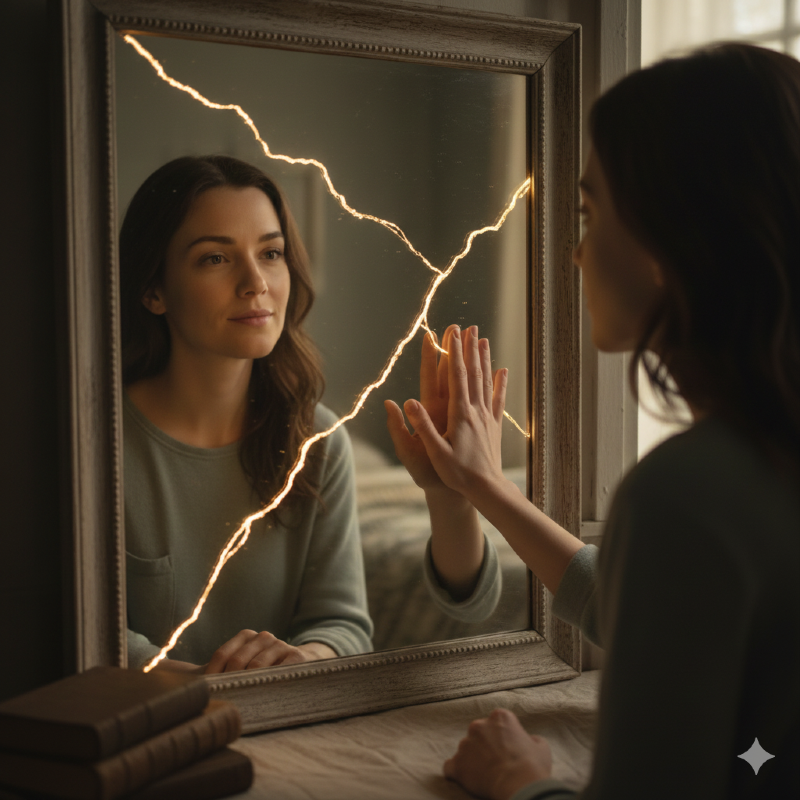
My last relationship has officially come to an end.
The reasons were many, but the final straw that broke me was my own “over-giving.”
It’s deeply ironic. I believed that “giving my all” was the ultimate proof of love. I never imagined that this boundless devotion would become the very weapon that destroyed the relationship.
I thought love meant going all in. I wanted to make him happy, to make the relationship better, so I did everything I could possibly think of. His needs came before mine. His moods mattered more to me than my own. His problems, I felt more urgency to solve than he did.
He was a foreigner working in Taiwan, struggling with the language. I started as his Chinese teacher, and once we were together, I slowly became his life assistant, work manager, professional interpreter… In short, I treated his matters as my own. Sometimes I felt exhausted and uneasy about it, but he needed me. Yes, that’s how I convinced myself.
Come Christmas, a tree appeared in my home, piled high with gifts for him. It wasn't just material things. Emotionally and spiritually, I centered him too—only eating what he liked, watching his favorite movies. My life felt like it was being lived for him, and I was completely unaware.
Back then, I didn’t understand that this behavior of ‘giving’ to confirm ‘being loved’ was, in fact, a deep-seated “emotional transaction.” What I offered weren’t simple gifts, but silent expectations—hoping he would use an equal measure of love to buy back my sense of security.
Of course, he saw all of this. Due to psychological patterns from his own upbringing, he didn’t initially know how to respond to such giving. We broke up and got back together many times before he slowly began to change his ways. It was only after our final separation that he truly felt the weight of my past giving, realizing he might never encounter someone like that again, and blaming himself for not listening to me sooner.
But it was all too late.
This is the cruelest paradox of over-giving: you give too much, too completely, and in doing so, you strip the other person of the space and capacity to ‘give’ naturally. The relationship becomes a one-sided act of charity. For the receiver, beyond gratitude and pressure, it’s hard to cultivate pure affection.
For me, after exhausting all my energy and not receiving a more balanced response, compounded by our personalities, my feelings slowly eroded until nothing was left. Only then could I let go and decide to end it. It was like an arm-wrestling match—once my strength was spent, the contest was officially over.
I’ve always had this issue in relationships. This one finally made me see that the internal lack and deficiency within me were the biggest reasons I kept playing the saint, the firefighter, the errand girl in love.
As excruciating as it was, these years weren't wasted. I’ve strengthened myself, seen my true reflection, and found my purpose. I no longer need a relationship to fill a void within me.
So, why do we find ourselves unable to stop over-giving?
The Fear of Loss
Often, over-giving is an expression of fear. We’re terrified that if we’re not good enough, not diligent enough, the other person will leave. So we frantically prove our worth, make ourselves “indispensable.”
I grew up with ingrained insecurity. Even though I acted tough, spoke loudly, and was blunt, deep down I never felt worthy of love. This profound, intense feeling of “not being enough” was buried so deep I never recognized how it influenced me. I only saw the surface-level, fearless version of myself.
I was truly afraid of being alone, of losing companionship. If someone liked me, I could easily convince myself I loved them back. This influence was too subtle, too deep. It took me fifty years to understand it.
The "Way to Love" We Were Taught
We’re taught from childhood that love means sacrifice, giving, and considering others. None of this is wrong. The problem is, we’re rarely taught that love also needs boundaries, that love needs balance.
I watched my mother give everything for our family, enduring hardship, always understanding others, tolerating all unfairness and vicious words. She would always say, “Don’t tell anyone,” and silently be the “good woman” I knew.
We grow up thinking love means emptying ourselves for the other person, forgetting: what can an empty shell possibly give? And that is exactly how I learned to be.
The Illusion of Control
To be honest, over-giving can also be a manifestation of a desire for control. We think if we just do enough, are good enough, we can control the direction of the relationship, ensure the other person loves us. My personality does have strong control tendencies. When things don’t go my way, I suffer. And this, too, stems from an intense craving to be loved, to be validated, a desperate wish for everything to go as I imagine.
But love isn’t a transaction. It’s not a game where what you give determines what you get.
It goes without saying, an imbalanced relationship cannot last. When one person is constantly giving and the other constantly receiving, the scales tip. The giver grows weary, the receiver feels the pressure.
The most dangerous thing is that over-giving slowly breeds resentment. You begin to keep score, to expect returns, to start feeling that the other person is taking you for granted. While I didn’t feel resentment, I came to understand that my giving wouldn’t be met with equal return, and naturally, I no longer wanted to give.
As someone who’s been through this, I want to share how you can detect if you’re over-giving. Ask yourself honestly:
☐ Do you always accommodate the other person’s schedule, preferences, and plans, rarely considering what you want? I stopped eating kimchi, cooked without onions or garlic—my entire lifestyle changed just to accommodate him.
☐ Do you find it hard to say “no”? When the other person makes a request, you always say yes immediately, even if it inconveniences or exhausts you. You fear that refusing will upset them or damage the relationship.
☐ Are you starting to keep a mental ledger? “I’ve done so much for him, what has he done for me?” Healthy giving asks for no return, but over-giving makes you unable to help but keep score.
☐ Is your world shrinking? To be with the other person, you’ve gradually drifted from friends and abandoned your own interests. If your friends have started complaining they can never reach you, that’s a clear warning sign.
If you’re wondering what I truly learned from this relationship—after all, an uncontrollable urge to give isn’t something you can easily stop by just telling yourself not to—you can try. Give yourself reminders or set up triggers.
But what I will say is this: the most important thing is to uncover the root cause behind your over-giving.
If you’ve read this far and resonated with parts of my story, I invite you to look inward and dig: what person, or what experience, programmed your inner software with the belief that ‘I must constantly give to be worthy of love’?
This is the most crucial step in ‘Manifestation Healing’: excavating limiting beliefs. We cannot manifest healthy love if our inner operating system is still running the old virus of ‘I am not enough.’
I am not a psychologist. But I am a practitioner who has used my own wounds to run a ‘manifestation experiment’ and genuinely rebuilt myself. If you, too, are drawn to growing yourself and are curious about how I transformed this broken relationship into the nourishment for my current inner abundance, you are welcome to read more articles on my website.
Become a free member today—get weekly articles delivered to your inbox, plus healing resources and growth tools I’ve created just for you.
BONUS READS:
 tingman
 tingman