When Your Body Is Still on High Alert: 5 Gentle Ways to Come Back to the Present
When your body feels on edge even though nothing is happening, you do not have to force yourself calm. Try five gentle ways to return to the present — and learn when it is time to seek more support.
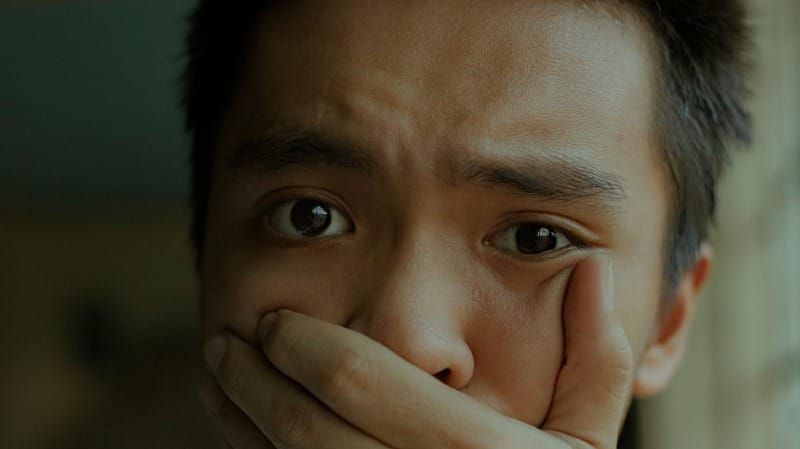
Nothing dramatic is happening.
You are just looking at a message. Standing in line for coffee. Lying in bed at the end of an ordinary day. Sitting across from someone you love.
And yet your body braces before you have even decided there is anything to be afraid of. Your chest goes tight. Your shoulders creep up toward your ears. Your thoughts start scanning for what might go wrong. Part of you wants to leave the room, over-explain yourself, fix everything at once, or just disappear for a little while.
Here is the confusing part. Your mind may already know better. You know the hard season has passed. You know this message is only a message. You know you are not standing where you once stood.
But knowing is not the same as feeling safe enough to let your guard down.
You may have heard the phrase, “the body keeps the score.” It can be a useful image, but it is not a literal instruction to go hunting through your muscles for stored trauma. A more grounded way to hold it is this: after frightening, overwhelming, or deeply unpredictable experiences, some people keep noticing patterns of stress and threat, even when the original danger is long gone.
This piece is for exactly those moments. Not to make you calm on command. Not to ask you to dig up your whole history in one sitting. Just to sit beside you, and offer a few gentle ways to help your body notice that this moment, right now, might be different.
This may be a high-alert response, not proof that something is wrong with you
We are built to learn from what we live through. If a certain kind of situation once left you feeling criticised, trapped, frightened, powerless, or unable to guess what would happen next, your system can become very quick to flag anything that even resembles it.
That cue can be so small. A raised voice. A message left on read. A difficult conversation. Money feeling uncertain. A familiar smell. A particular time of year. Or just the sense that someone is disappointed in you.
And the reaction comes fast: a racing heart, a clenched jaw, a stomach that drops, a mind that starts rehearsing every possible ending, a sudden urge to get away. These reactions are real. They are not proof that you are weak, dramatic, or somehow bad at healing.
They are also not proof that you are in danger right now.
Sometimes your body is simply doing the thing bodies are best at: trying to protect you quickly, with information that mattered a lot once upon a time. The hard part is that an alarm can stay this sensitive long after the situation that trained it has changed.
If you want to understand why one small cue can feel so much bigger than the moment itself, you can read Why Your Body Won't Let You Heal — The Science of Body Memory. But for right now, you do not have to solve the root of every reaction. You can just start here, with the present.
Before you look inward, look around you
When your body is on high alert, it is so easy to turn inward in the most frightening way possible.
Why is my heart doing this? What is wrong with me? Which old wound is this? What if I can't make it stop?
Sometimes looking inward helps. But in the middle of an alarm, hunting for answers often just turns the volume up. It becomes body-scanning: checking every breath, every heartbeat, every tight muscle for evidence that something is wrong.
There is another way.
Before you go searching for the deepest reason, let your attention widen to what is actually around you. Let your eyes take in the room. Let your ears find one sound that belongs to this ordinary day. Feel the air on your skin. Notice that you are not only inside a reaction, you are also in a place, at a time, with real objects and real choices all around you.
You are not trying to convince yourself that nothing hard will ever happen again. You are just gently reminding your system that there is more here than the one thing it is bracing against.
5 gentle ways to come back to the present
You do not need to do all of these. Honestly, just pick one.
A good practice should leave you with a little more room, a little more choice, not less. So if any of these makes you feel more panicked, more dizzy, more far-away, or more flooded, please stop. Go back to something simpler: open your eyes, look around the room, drink some water, or reach out to someone you trust.
1. Let your eyes find three ordinary things
Look slowly around you, and let your eyes land on three completely ordinary things. The edge of the table. A window. A colour on the wall. The handle of your mug. A shoe kicked off by the door.
If it helps, you can name them softly, just to yourself: window, blue cup, wooden floor.
This is not about pretending everything is fine. It is about giving your attention a few small anchors in the present, before your mind rushes off to write the next worst-case story.
When we are frightened, the mind narrows down to what might go wrong. Letting yourself notice a few plain, ordinary details is a quiet way of saying to yourself: there is more in this room than the fear.
2. Find one neutral place to rest your attention
You do not have to start with the tightest, most frightening spot in your body. You do not have to close your eyes and go looking for an explanation.
Try somewhere neutral instead. Your feet inside your shoes. Your back against the chair. The weight of your two hands resting together. The warmth of a cup held between your palms.
Then ask yourself only this: can I feel this, just for five seconds?
A chair holding you up is not a breakthrough. It doesn't need to be. It is just one small, true piece of information: I am here. Something is holding me. I can stay with this moment a little longer.
You are not forcing yourself to feel safe. You are just letting yourself notice one thing that asks nothing of you, one thing you do not have to fight or explain.
3. Let the next movement be your choice
High alert can make you feel trapped inside your own body. And sometimes even a tiny choice is enough to loosen that trapped feeling.
Turn your head and look to one side of the room, then the other. Stand up. Stretch your arms over your head. Walk to the kitchen for a glass of water. Pull on a sweater. Step outside for two minutes. Press both feet into the floor, then let go.
Choose one small movement that quietly says: I have options in this moment.
You do not have to shake, or cry, or “release” anything for it to count. You do not have to turn your body into another project to fix. Something small and gentle is enough.
4. Let your breath be ordinary, not perfect
“Just take a deep breath” is such common advice. It genuinely helps some people. But for others, especially when panic has already made you hyper-aware of every breath, trying to force a big deep breath can feel awful, and sometimes it makes the fear worse.
You do not have to perform being calm.
Let your breath be what it is. If it feels okay, you might let the out-breath be a little softer, or a little longer, than the in-breath. And if even that doesn't feel good, just come back to breathing the way you normally do.
The goal was never to control your body perfectly. It is just to stop fighting it, for one moment.
5. Borrow safety instead of carrying it all alone
Sometimes the most soothing thing is not an exercise at all.
It might be a familiar voice. A friend who simply says, “I'm here.” A pet leaning against your leg. A walk with someone. A proper meal. A warm shower. A single text that says, “I'm having a hard moment, can you stay with me for a minute?”
We so often talk about calming ourselves down as though it is something each of us has to master completely alone. But being met by someone steady matters. That steadiness is part of how a nervous system slowly learns that it does not have to stand guard every second of the day.
You are allowed to borrow a little calm from someone else while you are still building your own.
When you need a small place to begin
If you are in an anxious or overwhelmed moment and you would like a little structure to hold on to, I made a free English Anxiety Relief App, with a short grounding guide and a private space to write. It is not trauma therapy, and you never have to push yourself through any practice that makes you feel less safe. Use only what feels manageable right now. Try the Free Anxiety Relief App. Free to use. On first use, the app asks for your email to create a free Future Healing Design membership, and you can unsubscribe from future emails at any time.
The phone call that could take over my whole day
There was a time when I had a tense relationship with an elder in my family whom I loved very much.
Her name would light up on my phone, and before I had even answered, my whole body already knew. My shoulders climbed. My chest went tight. And the strange part was that it didn't stop when the call ended. The moment we agreed to meet, the tension moved in and stayed, sitting with me through every hour until the meeting was finally over.
I think I braced because being near her so often meant hearing what I hadn't done well enough, or how I should be doing things differently. It was almost always wrapped in the same phrase: this is for your own good. I believe she meant it. But what reached my body wasn't care, it was pressure. From the second I saw her name, I couldn't focus on anything else. I felt tense, low, unable to work. My mind kept circling back to that meeting as if it were something I had to survive.
For a long time, I told myself I should just be more understanding. I loved her. I knew she carried her own worries. So I turned the whole thing on myself: I was too sensitive, too easily shaken, too weak to handle an ordinary family relationship.
What finally changed things was this. I did not have to decide whether she was a good person or a bad person in order to take my own reaction seriously. My body had simply learned that these moments often came with criticism, with the risk of feeling small, and it was trying to get me ready. What helped was not forcing myself to be fine. It was letting myself notice the alarm without obeying it. I could pause before the meeting. I could choose what I would share and what I would keep. I could remind myself that her disappointment did not automatically mean I had done something wrong.
I didn't need to prove my reaction was irrational. I just needed one small reminder that I still had choices.
What not to do when you are already overwhelmed
When the alarm is already loud, it is so tempting to try to solve everything at once.
You might want to pin down the exact experience that caused it. You might go hunting for a hidden trauma, test your body over and over, or force yourself through a long meditation because someone told you that discomfort means the healing is working.
You do not have to do any of that.
You do not need to uncover your entire history while you are just trying to get through a hard afternoon. You do not have to treat every tight chest or tense shoulder as proof of a buried memory. And you do not have to push through a body scan, a breathing exercise, or a visualisation that leaves you feeling more frightened than when you started.
Body awareness is not automatically helpful simply because it is body awareness. Research on interoception, the sensing and interpreting of what is happening inside your body, actually distinguishes a mindful, non-judgmental kind of awareness from an anxious, ruminative self-focus.
And that distinction matters so much. One asks, gently: what is here, and what would help me right now? The other asks, on a loop: what is wrong with me, and how do I make it stop?
If a practice leaves you less present, or less able to choose, it is completely okay to stop. Looking out the window, putting your feet on the floor, drinking a glass of water, or talking to someone can be more than enough for today.
If you often feel flooded by too much at once but cannot yet name what is underneath it, you may also find this guide helpful: When You Feel Too Much at Once: A Gentle Way to Find the Emotion Underneath.
When self-support is not enough
Everything here is for gentle self-support. It is not a diagnosis, and it is not a replacement for trauma treatment.
If paying attention to your body brings up flashbacks, intense panic, dissociation, urges to harm yourself, or a sense that you are no longer really in the present, please do not push through. Stop the exercise. Open your eyes if they are closed. Look around and find the room again. Reach out to someone you trust if you can.
It is worth speaking with a licensed mental-health professional, especially if the symptoms are lasting, disrupting your sleep or work, making you avoid parts of your life, or leaving you unable to care for yourself. Persistent trauma-related symptoms deserve real support, and a qualified clinician can help you understand what is happening and talk through treatment that actually fits you.
You do not have to decide, all on your own, whether something is “serious enough” to deserve help. And if you are in immediate danger, or you think you might act on thoughts of harming yourself, please contact emergency services or a crisis line in your country right away.
You do not have to win an argument with your body
You may not be able to talk yourself out of every alarm. And you do not have to.
The next time your body goes on high alert, see if you can offer yourself just one small interruption. Look around the room. Feel the chair holding you. Move, on purpose, because you chose to. Let your breath stay ordinary. Or ask someone to sit beside you in the hard moment.
Healing was never about forcing your body to forget. It might be something quieter than that: learning, again and again, that you have more than one option when the alarm goes off.
Your body is not your enemy. It may simply need to feel, over and over, that it is being met with more care, more context, and more choice than it ever had before.
For more English guides on emotions, relationships, and the nervous system, you can start with the English Hub here.
FAQ
Why does my body feel on high alert when nothing is happening?
Stress reactions can be shaped by many things: difficult experiences, ongoing conflict, uncertainty, lack of sleep, health conditions, and learned expectations. The feeling is real, but it is not automatic proof that you are in danger in this exact moment. If it is persistent or distressing, a qualified clinician can help you understand it without jumping to conclusions.
Is feeling on edge the same as having PTSD?
Not necessarily. Feeling tense, anxious, or unable to relax can have many causes. PTSD is a clinical diagnosis based on a particular pattern of symptoms and impairment, and a qualified mental-health professional can assess it if you are concerned.
Do I have to focus on my body to feel better?
No. Some people find body awareness helpful, while others find it overwhelming. You can start on the outside instead: look around the room, notice sounds, move gently, or talk to someone you trust. The goal is more choice, not more intensity.
Can breathing exercises make anxiety worse?
For some people, especially during panic, a strong focus on breathing can feel uncomfortable. You do not need to force a deep breath. Keep your breathing natural, or choose another grounding option if breathing makes you more anxious.
Can yoga, movement, or somatic work cure trauma?
Some people find movement, yoga, mindfulness, or body-oriented approaches helpful as supports. But the evidence varies by method, and it does not support presenting any of them as a guaranteed cure. They do not replace trauma-informed professional care when symptoms are significant.
References
[1] Leech, K., Stapleton, P., & Patching, A. (2024). A roadmap to understanding interoceptive awareness and post-traumatic stress disorder: a scoping review. Frontiers in Psychiatry, 15, 1355442.
[2] National Institute of Mental Health. (2023). Post-Traumatic Stress Disorder.
[3] National Institute for Health and Care Excellence. (2018). Post-traumatic stress disorder: recommendations.
[4] Swedish Agency for Health Technology Assessment and Assessment of Social Services. (2023). Body-based interventions for the treatment of post-traumatic stress disorder.